
What’s the Difference Between Bio and Non-Bio Laundry Detergent
When it comes to doing laundry, you need to make sure you are choosing the right detergent so that you can ensure you achieve clean and fresh-smelling clothes as often as possible. There are numerous options available when looking to achieve this, and among the two most prominent choices are bio and non-bio laundry detergent.
Understanding the differences between the two is really important for being able to make the right decisions, as well as achieving effective cleaning in the process too. Not only that, but it is vital for being able to cater to skin sensitivities as well. In this blog post, we will seek to explore the disparities between bio and non-bio laundry detergent, as well as how Love2Laundry can help you to make the right choices, and provide you with just what you need.
Quick Answer: Bio detergent contains enzymes that break down protein-based and starch-based stains more effectively, making it a strong choice for tough everyday laundry. Non-bio detergent contains no enzymes, which makes it gentler on the skin. This makes it a better option for babies, people with sensitive skin, and allergy sufferers.
Bio vs. Non-Bio: The Differences
Understanding the differences between bio and non-bio is really important when it comes to making informed decisions and helping to make things work better for you.
This is why you need to gain an understanding of what these differences are, as well as how they will impact you. So, let’s check out bio and non-bio, what they are, and what the differences between them are.
What Is Bio Laundry Detergent and How Does It Work?
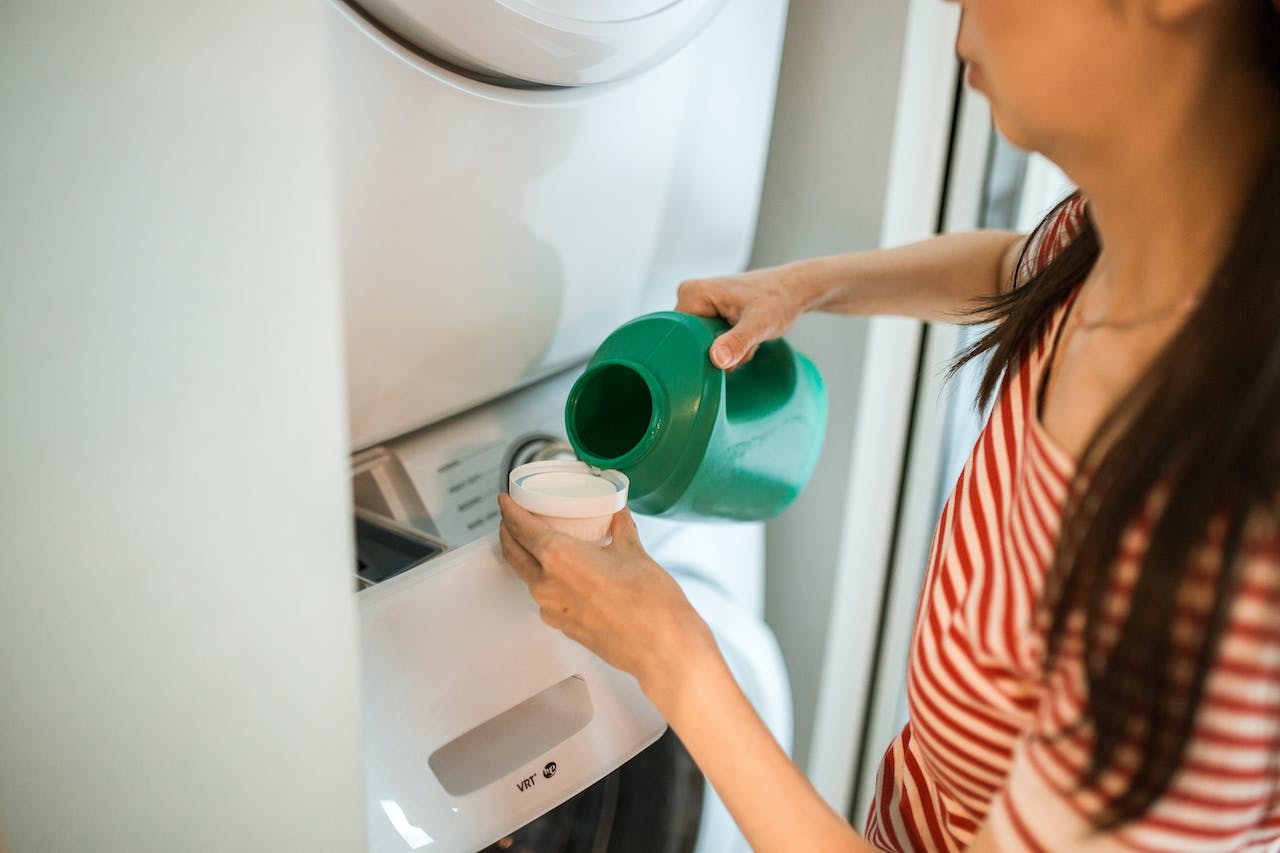
Bio laundry detergent contains enzymes. These are natural proteins that target and break down specific types of stains at a molecular level.
Different enzymes tackle different stains. Proteases break down protein-based stains like blood, sweat, and grass. Amylases go after starch-based stains from food like pasta, rice, or gravy. Together, they make bio detergent very effective at lifting the kind of stains that build up in everyday laundry.
The best temperature for bio detergent is between 30°C and 40°C. Enzymes are biological, and they work best in cooler water. Above 60°C, the heat destroys them, and you lose most of the cleaning benefit. Washing at lower temperatures also saves energy, which is a bonus.
Non-Bio Laundry Detergent: Why It Is Gentler
Non-bio detergent is formulated without enzymes. It also leaves out optical brighteners, which are chemical additives that can irritate the skin. These two things together are what make it a genuinely milder option. It is not just a marketing claim.
The major difference between bio and non-bio detergent is that bio cleans more aggressively, and non-bio is kinder to the body. For anyone wondering whether bio or non-bio is better for sensitive skin, non-bio is the safer choice. Dermatologists often recommend it for people with eczema, allergies, or reactive skin. It is also the go-to for washing baby clothes and items worn next to delicate or broken skin.
Why Choose Bio or Non-Bio?
Both detergents do the job, but they do it differently. The right one depends on your laundry, your skin, and the people in your household. Here is a quick side-by-side to help you decide.
| Category | Bio Detergent | Non-Bio Detergent |
| Stain Power | Stronger. Enzymes target protein stains (blood, sweat, grass) and starch stains (food, gravy). Better for heavily soiled laundry. | Milder. Cleans everyday dirt effectively but less suited to tough or set-in stains. |
| Skin Sensitivity | Contains enzymes and optical brighteners that can irritate sensitive or reactive skin. Not recommended for eczema-prone skin. | Free from enzymes and optical brighteners. Gentler on skin. Recommended by dermatologists for sensitive skin, eczema, and allergies. |
| Temperature Performance | Works best between 30°C and 40°C. Enzymes break down above 60°C, reducing cleaning effectiveness. | Effective at 30°C and above. Performs consistently across a wider range of wash temperatures. |
| Best For | Active households, outdoor clothing, gym wear, and laundry with heavy or frequent staining. | Babies, young children, people with sensitive skin, allergies, or conditions like eczema. |
Love2Laundry – Your Laundry Care Partner
Once you know which detergent suits your household, Love2Laundry takes care of the rest. We are an award-winning on-demand laundry service that handles collection, washing, and delivery around your schedule. Whether you need a regular laundry collection or a one-off refresh, you can book and manage everything through our laundry app in a few taps.
Bonus reads:

In Conclusion
Understanding the differences between bio and non-bio laundry detergent is essential for mastering your laundry process, and making the ultimate choices for helping you make your laundry better is essential. This is something you need to focus on in order to make sure you are getting the ideal detergent to suit your specific needs. Working with Love2Laundry can help you to ensure you are always getting the right detergent needs for your laundry, and that you are protecting your skin and looking after your clothes.
FAQs
Is non-bio detergent the safer choice for washing baby clothes?
Yes. Non-bio detergent is better for babies because it contains no enzymes or optical brighteners, both of which can irritate delicate and sensitive skin. It is the recommended choice for newborns and young children.
Does bio detergent still work in a cold water wash?
Yes. Bio detergent works in cold water but performs best between 30°C and 40°C. Below that range, enzymes become less active. Above 60°C, the heat destroys them completely, so a cool to warm wash is the sweet spot.
Can bio laundry detergent cause skin irritation?
Yes. Bio detergent can irritate skin in some people. The enzymes and optical brighteners it contains are common triggers for reactions, especially in people with eczema, allergies, or sensitive skin. Non-bio is the better option in those cases.
Is bio detergent more effective on grass and sweat stains than non-bio?
Yes. Bio detergent contains proteases, which are enzymes that break down protein-based stains like grass, sweat, and blood. Non-bio detergent lacks these enzymes, making it far less effective at lifting that type of stain.

